| Soutenez le travail de l'AJPN |
| Recherche de personne, de lieu : affiche la page | Recherche type Google : propose des pages | |||

|
| ||||||
|
| ||||||
|
39/45 en France (WWII)
base des données identifiées par AJPN.org  Nouveaux articles
Une page au hasard 38080 noms de commune 95 départements et l'étranger 1231 lieux d'internement 744 lieux de sauvetage 33 organisations de sauvetage 4381 Justes de France 1072 résistants juifs 16133 personnes sauvées, cachées
| ||||||
Expositions pédagogiques AJPN
 L'enfant cachée
Das versteckte Kind
Chronologie
1905/1945
En France dans les communes Les Justes parmi les Nations Républicains espagnols Tsiganes français en 1939-1945 Les lieux d'internement Les sauvetages en France Bibliothèque : 1390 ouvrages Cartographie Glossaire
Plan du site
Signaler un problème technique
|
||||||
|
||||||
|
| ||||||

|
Région :
|
|
Préfets :
Maurice Georges Bézagu
(14/11/1941 - 17/11/1944) Préfet délégué de Haute-Garonne (1880-1969)
Pierre Cassagneau
(21/08/1944 - 31/12/1944) Préfet de Haute-Garonne (1887-1963)
Camille Vernet
(29/12/1944 - 04/01/1946) Préfet de Haute-Garonne (1884-1957)
Frédéric Atger
(21/09/1935 - 13/10/1940) Préfet de Haute-Garonne
Léopold Chénaux de Leyritz
(25/06/1940 - 24/01/1944) Léopold Marie Frédéric Chéneaux de Leyritz, Préfet de Haute-Garonne et préfet régional de la région de Toulouse à partir de 1941 (Ariège, Gers, Haute-Garonne, Hautes-Pyrénées, Lot, Lot-et-Garonne, Tarn et Tarn-et-Garonne et les parties non occupées des Basses-Pyrénées, de la Gironde et des Landes (1896-1970)
André Sadon
(24/01/1944 - 06/02/1944) André Paul Sadon, Préfet régional de la région de Toulouse (Ariège, Gers, Haute-Garonne, Hautes-Pyrénées, Lot, Lot-et-Garonne, Tarn et Tarn-et-Garonne et les parties non occupées des Basses-Pyrénées, de la Gironde et des Landes (1891-1965)
Jean Cassou
(1944 - 1944) Commissaire régional de la République de la région de Toulouse (Ariège, Gers, Haute-Garonne, Hautes-Pyrénées, Lot, Lot-et-Garonne, Tarn et Tarn-et-Garonne et les parties non occupées des Basses-Pyrénées, de la Gironde et des Landes (1897-1981)
Pierre Berteaux
(1944 - 1946) Pierre Félix Berteaux, Commissaire régional de la République de la région de Toulouse (Ariège, Gers, Haute-Garonne, Hautes-Pyrénées, Lot, Lot-et-Garonne, Tarn et Tarn-et-Garonne et les parties non occupées des Basses-Pyrénées, de la Gironde et des Landes (1907-1986)
|









| Juste parmi les Nations |
|
Dossier Yad Vashem :
2142
Remise de la médaille de Juste : 13/07/1982 Sauvetage : Toulouse 31000 - Haute-Garonne Gurs 64190 - Pyrénées-Atlantiques Aspet 31160 - Haute-Garonne | ||
|
||||
| [Créer un nouvel article et/ou ajouter une photo] |
 |
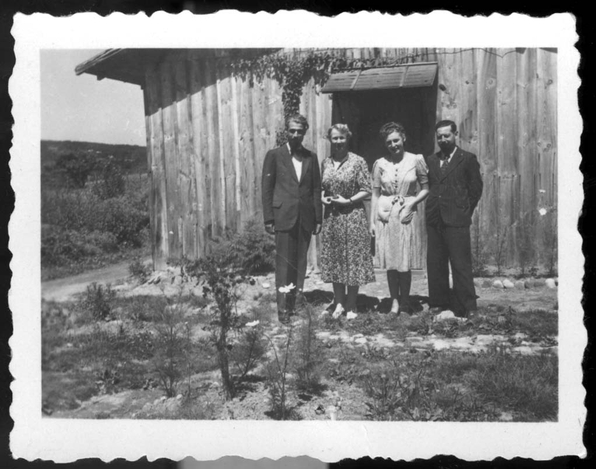 Dr Rothschild, Helga Holbeck et Alice Resch à Gurs source photo : Yad Vashem crédit photo : D.R. |
|
|
Alice Resch*, petite-fille d’un armateur norvégien, est née en 1908 à Chicago aux États-Unis d’une mère allemande, élevée en Norvège. Ses parents, Knut et Frida Resch, s'étaient rencontrés en Allemagne et mariés aux États-Unis en 1903.
Son frère Wilhelm Herman naît en novembre 1910 à Chicago.
Le couple et leurs enfants rentrent en Norvège en 1913. A la déclaration de la 1re Guerre mondiale, Knut se retrouve sans emploi et rentre aux Etat-Unis. Ils est nommé administrateur de Tyssefaldene Inc. en Norvège et en 1915, la famille s'installe dans une grande maison à Tyssedal, un petit village dans les fjords.
Alice Resch* part faire ses études à Hamburg, puis à Cologne, et poursuit des études d’infirmière à l’Hôpital américain de Neuilly-sur-Seine a partir de 1929.
À la déclaration de guerre, elle retrouve l’une de ses amies, Anne Crawshay , qui elle-même a fait des offres de service à Howard Kershner. Ces femmes suivent le flot des réfugiés de l’exode, au printemps 1940, jusqu’à Bordeaux et Agen ; c’est alors que Helga Holbek* propose à Alice* de la rejoindre à Toulouse, ce qu’elle accepte. Ni l’une ni l’autre ne sont quakers, mais elles apprécient de travailler dans cette ambiance. Alice* oeuvre d’abord principalement au service des réfugiés espagnols, comme le reste de l’équipe, puis accompagne Toot Bleuland van Oordt, une quaker hollandaise, dans ses tournées destinées à distribuer des fonds américains dans les camps de la région toulousaine, dont Gurs.
En février 1941, elle est partie prenante d’une opération conjointe avec l’OSE (et Andrée Salomon) et destinée à faire sortir légalement 48 enfants juifs (presque tous allemands) du Camp de Gurs et à les héberger dans la Maison des Pupilles de la Nation, à Aspet (Haute-Garonne), au pied des Pyrénées, dirigée par Henri Couvot. Ce dernier, qui ne parle pas allemand et doit accueillir des enfants qui ne parlent pas français, est inquiet devant la tâche, et Alice Resch* est appelée en renfort jusqu’à l’arrivée d’un couple de l’OSE, les Cohn.
Martin Eckstein, né à Meinheim (Allemagne) avait été déporté au camp de Gurs avec sa famille. Il fait partie des enfants extraits de Gurs par l'OSE et confié à la Maison des Pupilles de la Nation. En février 1943, aidée d'Helga Holbek*, Alice Resch* accompagne Martin Eckstein, Frederick Raymes et Menachem Mayer à Toulouse, munis de faux passeport suédois et les accompagne jusqu'à Annemasse, afin que les trois enfants, rejoints par d'autres enfants juifs, puissent passer en Suisse grâce à l'aide d'une passeuse de la Croix Rouge. Ils seront tous sauvés.
Kolos Vary et son épouse, vont également être aidés par Helga Holbek* et Alice Resch*. Elles parviendront à les faire passer en Suisse.
En août 1941, Hal Myers, une jeune garçon allemand âgé de 10 ans, arrive à la gare de Toulouse Matabiau. Il attend la personne chargée de venir l'accueillir, mais personne ne vient. Il marche et demande à un taxi de l'emmener chez les Quakers. Il arrive 16 boulevard Bon Repos devant l'immeuble portant la plaque "Société Quaker”. Il sera sauvé.
Alice Resch* s’installe à Aspet où, avec l’aide d’un Juif autrichien assigné à résidence dans le village, elle prend en charge la colonie scolaire, multipliant les jeux de football et les promenades (il n’y avait ni livres, ni jouets), assurant une alimentation bien plus abondante qu’au Camp de Gurs. Les jours de pluie, une école est improvisée et les enfants parlent bientôt un bon français. Chaque soir, comme tant d’autres jeunes femmes de cette époque, Alice* consacre quelques instants de conversation à chacun des enfants et leur souhaite bonne nuit. "Il y avait tellement de sentiments meurtris et de tragédies incompréhensibles dans ces petites âmes, qu’il leur était précieux de pouvoir parler, d’être bordé dans son lit le soir et d’avoir un baiser de bonne nuit."
Sa mission terminée à Aspet, Alice Resch* continue à aider des Juifs : elle place une fillette dans un orphelinat des Petites Soeurs des pauvres, et son grand frère à la Trappe de Sainte-Marie du Désert (Gers), qui abrite déjà des Juifs adultes ; après bien des mésaventures, elle parvient à faire passer en Suisse quatre autres enfants, âgés de cinq à dix ans, ici en liaison avec le Service André, un réseau juif.
En revanche, l’invasion de la zone sud réduit à néant le vaste projet d’émigration vers les États-Unis de 500 enfants juifs du Sud-Ouest, un projet mûri à partir de septembre 1942, Alice* ayant entrepris à cette fin une tournée qui l’a menée, notamment, aux châteaux de Chabannes (OSE) et de La Hille (infra) et à Aspet.
Dans la région parisienne, l’un des responsables du comité juif de la rue Amelot (infra) a signalé au lendemain de la guerre l’aide apportée par les quakers Ernest Le Roy et Mlle Cook dans le placement ou la protection des enfants juifs, notamment à Versailles pour le premier.
Durant l'occupation, elle rencontre Magnus Synnestvedt, qui deviendra son mari.
En décembre 1945, elle reçoit la permission de rentrer en Norvège où elle restera jusqu'en avril 1946, avant de rentrer à Paris. Elle travaille pour le American Unitarian Service Committe jusqu'à sa fermeture en novembre 1948. Elle retourne en Normandie en janvier 1949 et occupe le poste de secrétaire pour l'organisation suédoise de sauvetage des enfants juifs, Rädda Barnen et en prend la direction en janvier 1950.
En 1960, après 32 années en France, elle rentre chez ses parents à Lofthus et part vivre à Copenhague après leur décès.
Sources : Patrick Cabanel, Histoire des justes de France, Armand Colin, 2012, pp 133-134.
Over the Highest Mountains, témoignage de Alice Resch Synnestvedt, 2004.
Lien vers le Comité français pour Yad Vashem
Histoire
This story is told in an epilogue to Over the Highest Mountains by Alice Resch Synnestvedt. Hal Myers and his family had been evicted from their home in Karlsruhe, Germany, and sent by train to the appalling concentration Camp de Gurs in SW France. Five months later, he and 47 other children were rescued by Alice Resch and transferred to a children’s orphanage in Aspet, 50 miles south of Toulouse. Alice Resch convinced the Vichy authorities that the Quakers would care for these children, thus relieving the French from further responsibility. Of those 48 children, all but one were eventually saved from the fate which befell all of their parents. In 1983, she and her colleague in Toulouse were awarded the title of “Righteous Gentile” in Jerusalem.
Alice Resch was born in the USA to Norwegian parents, but most of her childhood was spent in a remote part of Norway. She moved to Paris to train as a nurse and then as a physiotherapist. She became a private nurse, and accompanied sick rich women to and from America. All this was to change with the outbreak of war.
In June 1940, Alice met Helga Holbek, a Danish Quaker who was based in Toulouse, and had been working for some years with Spanish refugees. Initially this work was based in two small rooms in the Episcopal Palace, and then in the Chateau de Larade. Alice describes this as an old dilapidated building with a pompous name, and eventually this became the hiding place for Jewish children. I have been unable to locate this “chateau”, although there is a street named “Larade” just north of the canal.
As refugees began to pour into Toulouse in May 1940, the relief workers took over a large warehouse, the “Halle Aux Grains” which I believe is now a concert hall. Here, 4,000 hot dinners were served daily for the next 3 months. All this work was being funded by the American Friends Service Committee. By now, Alice had arrived, and was given the job of overseeing the work at these two sites. She was joined by a Dutch noblewoman known as “Toot” who had studied at Woodbrooke and came to Toulouse by way of the Berlin and Paris Quaker offices. Eventually, a derelict shoe-lace factory was found opposite the station – No. 16 Boulevard Bonrepos, with storage rooms, offices, dining room and a large courtyard to accommodate the several vehicles that had been acquired in various ways. Alice wryly remarks that the sign “Quakers Americains” was somewhat inappropriate as there was only one American involved, and only one Quaker! However, supplies of clothing, food, medicines and money were being received from the American Friends in Philadelphia. The first winter, the “Quakers” were feeding 8,000 children daily, within a year this had increased to 30,000! – not of course all at Bonrepos! – mostly the children were in schools, orphanages and camps.
The work directed from Toulouse reached out into more distant areas. Helga Holbek discovered that there were two deserted villages in the Tarn which would make suitable homes for the refugees. Here, Spanish and displaced persons from Lorraine were resettled, and encouraged to make wooden toys in a well equipped workshop. Soon orders for their products were coming in from various sources, and the former refugees were settling down to a life of self-sufficiency and self-respect. I visited one of these villages the other day, Puycelci near Caussade. It is now a tourist spot, high on the hill with superb views over the surrounding countryside, and is one of the “Most Beautiful Villages of France”. I tried to find clues to what happened there in 1940, but no-one seemed to know. The only confirmation of the story I could find, was a board outlining its history, and stating that between the wars it had become depopulated.
One chapter in the book describes the Quaker work in the concentration camp at Gurs. The Toulouse Quakers became involved in October 1940, when the camp was filled with Jewish inmates. A day-care centre was established in the camp, and a school for the older children. When it was discovered that the prisoners were only receiving around 1,000 calories a day, a Quaker kitchen was installed, and as a result, conditions improved. In the summer of 1942, the first deportations began to take place. It was to save the children from this fate, that after much arguing with the Vichy authorities, many of them were taken by the Quakers to the orphanage at Aspet. Here, Alice Resch moved in with the children, sleeping in a dormitory with only two hanging sheets for privacy!
On her return to Toulouse, Alice became involved in hiding families from the authorities, and this meant working with the resistance. Helga said to her “You have to choose if you want to work for the Quakers or for the resistance. We can’t risk compromising our work. If you are discovered, it will be the end of us!” Although she describes her resistance work as “extremely peripheral”, it is evident from the letters of those she sheltered and helped escape that she played an important role.
By now, other concentration camps were filling with Jews, and the Toulouse Quakers set up a base in Rivesaltes. Hiding places were found in convents and monasteries, La Trappe de Saint Marie to the west of Toulouse for example, La Motte convent near Muret, and the Chateau de la Hille in Ariège.
There is so much more in this fascinating book. Perhaps the most surprising thing is the attitude of the Gestapo guards to the work of the Quakers. When a tip-off was received that a deportation train was on its way from Rivesaltes, vast quantities of boiled rice would be prepared and rushed to Toulouse Matabiau station, along with gallons of water. Only the Quaker contingent would be allowed onto the platforms to feed and water the prisoners in the cattle wagons. Apparently this was out of recognition for the relief work which British Quakers had done in Germany at the end of the first world war.
After the departure of the occupying forces, Alice, by now married to Magnus Synnestvedt, transferred her activities to the north with Helga Holbek to start Quaker relief amongst the war-torn region of Normandy. But the main part of this book tells the story of the incredible work done under the name of Quakerism in and around the city of Toulouse. To fully appreciate the magnitude of this work you must read the book for yourself! Like me, you will find yourself looking at Toulouse with different eyes, searching for places mentioned in the book, and wondering if people who live and work there today have any knowledge of what was achieved there all those years ago!
29/02/2012
Auteur : Bernard Wilson
Lien : Toulouse Quakers
Alice Resch-Synnestvedt
During World War II, in France, the Norwegian Alice Resch known as “Miss Resch,” worked for the American Friends Service Committee, a Quaker organization, and helped rescue many Jewish children. She was active in humanitarian aid given to the refugees and became close friends with the Danish Helga Holbek* who was in charge of supervising 16 institutions for refugee children in southern France. On the initiative of the OSE organization, at the end of February 1941, about 50 children were taken from the Gurs concentration camp to an orphanage in Aspet, near St. Gaudens, in the south of France. Resch and Holbek took care of the children until the fall of 1942, and then some of them were transferred to the Château de Larade orphanage in Toulouse. They also dispersed them to other orphanages in the area. Some of the children remained in the homes until May 1944. Many of them were smuggled out in the spring of 1944 to Switzerland. OSE employees, Ruth Lambert and Dora Wertzberg Amelan testified as to the important role of Resch in saving children during the war, confirming that Resch endangered her life many times. One of the survivors, Martin Eckstein testified that in Feb. 1943, Miss Resch personally accompanied him and three other children to the border, handing him documents that enabled him to enter Switzerland. Two brothers, Frederick Raymes and Menachem Mayer wrote about their war experiences, and the roles Resch and Holbek played in their survival, in the book Are the Trees in Bloom Over There?, (2001). Resch married Marcus Synnestvedt in 1943 and remained in France until 1962, when she was widowed and then moved to Norway. She wrote a book about her experiences during the war titled “Over the Highest Mountains: A memoir of Unexpected Heroism in France during World War II.” On July 13, 1982, Yad Vashem recognized Alice Resch-Synnestvedt as Righteous Among the Nations.
08/02/2015
Lien : Yad Vashem
Réseau de sauvetage Henri Couvot Mary Elmes Helga Holbek Andrée Salomon |
Familles hébergées, cachées, aidées ou sauvées par Alice Resch Martin Eckstein Matyi Kolozsvary Sigismund Kolozsvary Uri Landau Menachem Mayer Hal Myers Frederick Raymes Madame Vary Kolos Vary |
Chronologie [Ajouter] Témoignages, mémoires, thèses, recherches, exposés et travaux scolaires
[Ajouter le votre]
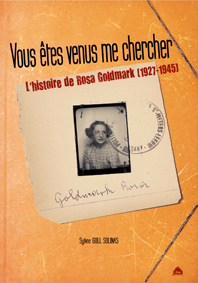
Vous êtes venus me chercher L'histoire de Rosa Goldmark, Récit
157 pages,
réalisation 2014 Liens externes
Cet article n'est pas encore renseigné par l'AJPN, mais n'hésitez pas à le faire afin de restituer à cette commune sa mémoire de la Seconde Guerre mondiale.
Auteur :
SYLVIE GOLL SOLINAS
- terminal
1 Rencontre avec Paul Niedermann (Conférence de Paul Niedermann (1h24) enregistrée en mars 2011 au collège d'Estagel dans les Pyrénées-Orientales. Paul Niedermann retrace son parcours entre 1935 et 1945 de Karlsruhe à la Maison d'Izieu, en détaillant son passage au Camp de Rivesaltes. )
2 Page Facebook de Lois Gunden Clemens
3 Lien vers l'éditeur du livre "La Villa St Christophe à Canet-Plage" (La Villa Saint Christophe maison de convalescence pour enfants des camps d'internement avril 1941 février 1943 )
4 Vous êtes venus me chercher (Blog de l'auteur - parutions, conférences, signatures... )
5 Elie Cavarroc, Juste des Nations (M. Elie Cavarroc, nommé Juste des Nations. Référence du dossier n°10002 du Comité Français pour Tad Vashem )
|
Annonces de recherche
[Déposer une annonce]
|
Avertissement Les informations affichées sur le site de ajpn.org sont fournies par les personnes qui contribuent à l'enrichissement de la base de données. Certaines, notamment les témoignages, ne peuvent être vérifiées par ajpn.org et ne peuvent donc pas être considérées d'une fiabilité totale. Nous citons les sources de ces informations chaque fois qu'elles nous sont communiquées. Toutes les demandes de rectification de données erronées sont bienvenues et, dans ce cas, les corrections nécessaires sont appliquées dans les meilleurs délais en citant la source de ces corrections. C'est par cette vigilance des visiteurs de notre site que nous pouvons assurer la qualité des informations conservées dans la base de données ajpn.org |
| * Juste parmi les Nations |
|
|||
|
Justes parmi les Nations - Righteous among the Nations - De Gerechten mank de Völker - Giusti tra le nazioni - Drept între popoare - Gerechter unter den Völkern - Sprawiedliwy wsród Narodów Swiata - Rechtvaardige onder de Volkeren - Justuloj inter la popoloj - Rättfärdig bland folken - Spravodlivý medzi národmi - Spravedlivý mezi národy - Vanhurskaat kansakuntien joukossa - Világ Igaza - Justos entre as nações - Justos entre las Naciones - Justos entre les Nacions |
||||
| © Lhoumeau, Marchal 2008-2024 |